Sand and gravel often contain clay, silt, dust and fine impurities after crushing or excavation. These materials can affect grading, moisture content and the suitability of the final product for concrete, construction or other applications.
A properly configured sand washing and dewatering system removes unwanted material, recovers usable fine sand and reduces excessive surface moisture. The correct equipment combination depends on the raw material, required capacity, water conditions and final product specifications.
Why Sand Washing Is Important
Crushed sand and natural sand can contain soil, stone powder and other fine particles. Washing separates these impurities from the usable material and helps produce a cleaner, more consistent product.
The washing process must be controlled carefully. Excessive washing may remove valuable fine particles, while insufficient washing can leave too much clay or silt in the finished sand.
Material Cleanliness
Clay and sticky material can attach to the surface of sand particles. Mechanical agitation and water help separate these impurities so they can be discharged with the wastewater.
The washing intensity should be matched to the contamination level. Material with a high clay content may require stronger agitation or more than one washing stage.
Moisture Control
Freshly washed sand contains a significant amount of water. Sending wet material directly to storage can create handling problems, extend drying time and produce water runoff.
Dewatering equipment removes part of the surface moisture before the material leaves the production line. This makes conveying, stockpiling and transportation more manageable.
Common Sand Washing Equipment
Different machines use different washing methods. Selecting the right system requires an understanding of the feed material and production target.
Wheel Sand Washing Machines
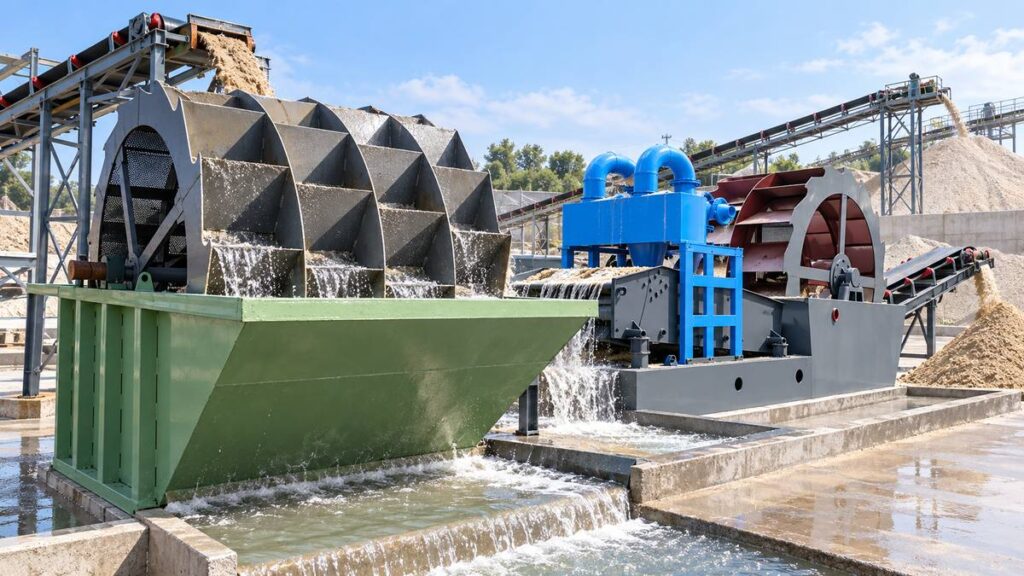
A wheel sand washing machine uses rotating buckets or blades to lift and wash material inside a water tank. Sand is agitated and cleaned as the wheel rotates, while impurities are carried away by the water.
Wheel washers are commonly used for sand and aggregate processing. Their simple operating principle and continuous discharge make them suitable for many production lines.
The wheel size, tank structure and processing capacity should be matched to the feed volume. Water supply and drainage arrangements must also be considered during installation.
Spiral Sand Washers
A spiral sand washer uses rotating spiral blades to move material through an inclined tank. During this movement, sand is washed and separated from lighter impurities.
The long washing path can provide effective agitation for material containing clay or fine contamination. Spiral washers are available in different sizes and configurations for varying production requirements.
Because the equipment operates in a wet environment, the condition of the spiral blades, transmission system and bearings should be checked regularly.
Fine Sand Recovery Systems
Some fine sand can be carried away with wastewater during washing. A fine sand recovery system helps separate usable particles from the slurry and return them to the finished product.
A typical system may include a slurry pump, cyclone separator and dewatering screen. The cyclone separates particles according to size and density, while the dewatering screen removes part of the remaining moisture.
Recovering fine material can improve product yield and reduce the amount of solids entering settling ponds or wastewater treatment equipment.
The Role of Dewatering Screens
A dewatering screen uses vibration and specially selected screen panels to separate water from solid material. The material moves across an inclined screen deck while water passes through the apertures.
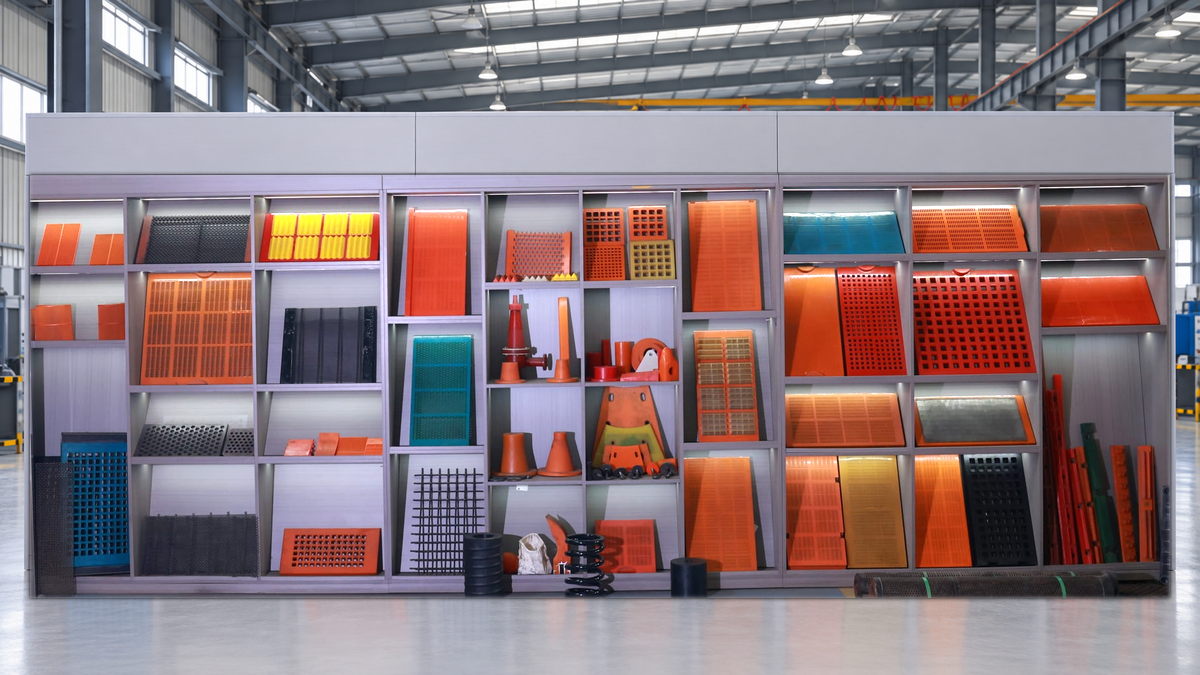
Polyurethane dewatering panels are commonly used because of their wear resistance and controlled opening sizes. Panel selection should be based on the particle size, capacity and required moisture level.
Feed Distribution
Uniform feed distribution is important for effective dewatering. Material concentrated on one side of the screen may cause uneven wear and reduce the available screening area.
Feed boxes, chutes and pipelines should deliver the slurry across the working width of the screen. The feed rate should remain within the equipment’s designed capacity.
Screen Panel Maintenance
Dewatering panels should be inspected for wear, damage and blockage. Damaged panels can allow oversized particles to pass or reduce the quality of the finished material.
Fastening systems and support structures should also be checked. Loose panels may vibrate incorrectly and experience premature damage.
Planning a Complete Washing and Dewatering Line
A complete system may include feeding equipment, a sand washer, slurry pump, cyclone separator, dewatering screen, conveyors and water treatment equipment.
The process arrangement depends on whether the customer needs simple washing, fine sand recovery, tailings dewatering or a combined solution. Water availability and discharge requirements can also influence equipment selection.
Water Circulation and Slurry Management
Recycling process water can reduce freshwater consumption and support more stable production. Settling tanks, filter presses or other separation equipment may be used to remove solids from wastewater before reuse.
Slurry pipelines should be designed to avoid unnecessary bends and sediment accumulation. Pumps must be selected according to the required flow rate, concentration and delivery distance.
Matching Equipment Capacity
Every machine in the line should have compatible capacity. If the washer processes more material than the dewatering screen can handle, wet material may accumulate and reduce efficiency.
The feed system, washing equipment, recovery unit and conveyors should be evaluated as one complete process.
Information Needed for Equipment Selection
Before requesting a solution, buyers should provide the material type, feed size, hourly capacity, clay content, required finished product size and available water conditions. Site photographs, layout drawings and information about existing equipment are also helpful.
Luosite supplies wheel sand washers, spiral sand washers, fine sand recovery and dewatering systems, tailings dewatering screens, cyclone separators and related components. Equipment can be reviewed according to the material characteristics and process requirements of the project.
A well-planned washing and dewatering system can improve material cleanliness, recover valuable fine particles and simplify product handling. Careful equipment selection and regular maintenance are essential for stable long-term operation.